Organic farming for me is as important as animal welfare. Both save thousands of species and make the world a better place for humans. When I became Minister for Women and Children, the ministry started a new project of holding an annual Mela in Delhi Haat, for 15 days, in which 300 women organic farmers are called from all over India to sell their produce. This year, products worth Rs 2 crore worth were sold and the ministry sent 50 women to a huge organic mela in Ahmedabad organised by Srishthi and now we are preparing for one in Mumbai in February.
I also make sure that one or more women organic farmers, or groups, get the highest award for women in India, the Nari Shakti award. In 2016, the best exhibition I went to was one of wandering pastoral tribes in India and the NGOs that conserve their cultural forms, camels and their milk. The best exhibition I went to this year was a huge organic one in Noida which had more than 700 companies, institutions, NGOs and individuals taking part. It was organised by OFAI which is headquartered in Goa and headed by Dr Claude Alvares. I bought a beautiful pair of earrings for my sister made of red ratti (used to weigh gold at one point) and white Vaijayanti seeds made by a farmer’s wife.
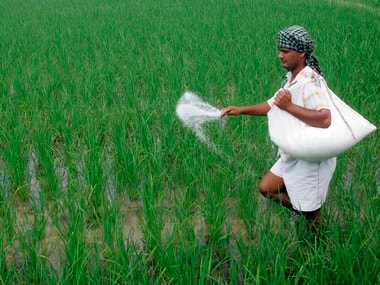
Representational image. Reuters
The Sikkim pavilion was the most impressive and the chief minister of Sikkim should get a Bharat Ratna for the work he has done to make the whole state organic. There were hundreds of varieties of rice, including one that you don’t have to boil, just simply pour hot water on. I saw vegetables that I have never seen before: huge long, white, aubergines (baingan), every variety of kaddu, cucumber and chilli. I saw red potatoes and at least 50 varieties of rajma ranging from white to purple. When I ate the lunch thali of village vegetables, I thought I’d died and gone to Food Heaven!
I would like you to know these women who have changed thousands of lives by simply collecting old seeds of long-forgotten vegetable varieties.
The Vanastree Malnad Garden and Seed Savers Collective in Sirsi, Karnataka is run by women. They have documented 120 varieties of vegetables, from the tiny sparrow ladies fingers (bhindi) to old varieties of sugarcane. All these are heritage seeds. You can get in touch with them at sunitasirsi@gmail.com.
Annadana is a Karnataka NGO started by Sangita Sharma. For the last few years, it has been practising and teaching sustainable farm practices and conserving over 200 old vegetable seeds. Sharma had realised that seed corporations and agricultural institutes were blasting seeds with toxins, chemicals and pesticides, contaminating all the food so she decided to start collecting, growing and distributing seeds to farmers. So far, she has distributed 3 lakh free seed packets to marginal farmers and is selling them at a low cost to garden enthusiasts. She has a training programme, called Seed to Seed, on soil health management. Sharma's core group now comprises 18 farmers who teach and they can be contacted at info@annadana-india.org
Niranjana Maru is from Wardha and has formed an NGO called Chetana Vikas. They have a demonstration farm of trees, grasses, tubers and fodder and concentrate on wasteland regeneration through teaching a mixed cropping system to local farmers. You can write to her at chetanavikaswda@gmail.com
Sabarmati Tiki is the daughter of Prof Radhamohan who bought degraded land in Nayagarh and, despite people calling his mission impossible, decided to regenerate it. He named the farm “sambhav” or “possible”. Sabarmati and her team grow 314 traditional rice varieties at the farm and distribute the seeds to farmers in Odisha. She can be contacted at sabarmati@gmail.com
Pebble Garden is a land regeneration project started by Deepika Kundaji on seven acres of laterite soil which was severely eroded with no topsoil. She and her partner set out to bring the old forest back, created water bodies, built up the soil by putting organic mulch and neighbourhood kitchen waste. Today, the land grows 80 varieties of vegetables, herbs and medicinal plants, many of which are endangered and never seen in markets. The seeds of these plants are shared with other farmers and seed savers. Contact her at pebblegardenforest@gmail.com
Mohinee Bhiste comes from Raigarh, Nainital and is part of a network of women farmers called Jan Prerna Sangathan. In 2009, she and her friends started exploring traditional seeds. They have made a bank of seeds of local wheat, millet, maize, barley and vegetables, where farmers can take freely provided they return double the quantity after the harvest. You can contact them at 09568254945.
And who can forget the contribution of Dr Vandana Shiva, who has been writing and working for non-violent farming and biodiversity since 1984? She has been actively involved in conserving 5,000 crop varieties, among them 3,000 kinds of rice, 150 kinds of wheat, 150 kinds of rajma and the rest vegetables and pulses. They have their own seed bank of 45 acres in Sherpur, Uttarakhand. I buy a lot of my monthly rations from Navdanya. You can contact her at dehradun@navdanya.net
This year for Diwali, I didn’t give useless mithai/statues / Ganeshes / dates or badams as gifts. I filled baskets of organic grains, pulses, jams, pickles, brought from small organic farmers from all over India, and gave these. Needless to say, each recipient was more than happy. After all, each one of us likes to eat well and the taste of organic wild rice, for instance, is incredible! We also like to feel safe, that our food is not giving us cancer. And we can only do that if we go forward to insisting on nonchemical, non-poisonous food. If you know any farmers, try to make them switch. As starter gifts, you can buy seeds from these women and give them to farmers.
Two Hindi proverbs say: kathiya gehu kargi dhan, jo bove vah chatur kisan. Farmers who grow Kathiya wheat and Kargi rice (both organic old varieties) are clever (because both can grow in dry and rainfed conditions. Kodau kare bhale mein chote, chote bade bhartev pet: Kodo, a millet, may be small in size but it feeds everyone from children to the elderly under adverse conditions.
Shamika Mone has written a source book on India’s organic seeds. You should definitely buy it from OFAI, Mapusa, goamyofai@gmail.com
SOURCE : https://www.firstpost.com/india/sowing-hope-how-some-women-have-given-organic-farming-a-fillip-by-collecting-seeds-of-long-forgotten-vegetable-varieties-4377263.html


 For the Aravaan actor, farming is a family project. On his three-acre land in Periyapalayam—which he bought for the simple reason that he wanted to grow and eat good food—everyone pitches in. “My wife is very interested in agriculture, my four-year-old helps out by pulling out weeds and harvesting small crops like coriander, even my personal assistant comes down often to help,” says the 47-year-old, whose self-sufficient model has inspired many fellow agriculturalists and farming enthusiasts to visit and emulate. For Pasupathy, his life is now about going back to the basics. He mostly grows local and indigenous plants and trees. “We started off with rice, chickpeas, legumes and pulses, and a lot of trees. We also have chicken, cows and fish. Whatever the household needs for a year is more or less grown here,” he states. Choosy about his work, the actor only takes a few projects, which gives him plenty of time to do what he enjoys. But when he does juggle roles, his wife takes over. “My wife (Suriya) is an architect, but she quit it to get into this full time. She handles everything and sometimes I feel like a visitor,” he laughs. Self-sufficient even when it comes to labour, he admits to hiring help at the farm only when the work is too much to handle by themselves. “Farming isn’t easy. It needs an attitude, a confidence and a lot of humility. If we want to see a change, we need to make it. The Gandhian philosophy says grow local food and eat local. I look at it as a way of life rather than a political principle,” he concludes.
 If there is ever a tale of rags-to-riches and balancing the high life and the slow, then Siddiqui’s is it. If you spot the 42-year-old walking the red carpet at Cannes and hobnobbing with tinseltown royalty on one day, just a few weeks later, you’ll find him in a tee and comfortable shoes, tilling the soil or harvesting tomatoes in his farms in UP. “It’s very relaxing. When you’re doing difficult characters and you go there and drive a tractor, it really keeps you grounded,” he says, adding, “When I’m there I wake up early, by 5 am; it’s not a city where we can sleep in.” He is often accompanied by his family and, while his wife Anjali isn’t too interested, his children are curious. “They’re too young to work or help around right now, but let’s see when they grow up, how they look at the place,” he smiles. Siddiqui, who harvests rice, wheat, millets and a whole host of vegetables (which he sends home and also sells at local markets), is most excited by a new irrigation system he will be introducing in a month. “When I was in Cannes last year (for Raman Raghav 2.0), I visited Nice and met a few filmmakers and farmers. They told me about their centre pivot irrigation (an overhead sprinkler system that is efficient and conserves water). I will be doing that in my farmland, so others can also make use of it. If you look at our villages, we use so much water. Our generation will manage, but what about the next?” he asks. The actor is also clear that when he finally bids adieu to the screen, he will return to the land because “it’s in my blood, there’s no running away from it”.
 I was passionate about going back to my roots (my father had a farm in Karnataka). So I bought a few acres of land 10 years back and started planting trees. In the last four-five years, I’ve become a serious farmer, growing vegetables and grains. I’m currently working with agriculturalists like Bannur Krishnappa (Mysore) and Subhash Palekar (Maharashtra) to start seed banking at our nursery in Auroville, and encourage local species
 I have been farming organically for 20 years. There’s no comfort like growing your own food, being healthy and self sufficient. However, the younger generation doesn’t always understand this. My own kids don’t have the interest. But at the end of the day, our land is our backbone and we should always find a way to go back to it.
 I’ve just started learning the basics; I’m growing bananas, jackfruit and mango trees to begin with. Hopefully, someday everyone will have a little garden of their own. When we were in school, we were taught to grow our own produce—when you grow your food, you respect what you eat.