Showing posts with label Small-Scale Agriculture. Show all posts
Saturday, February 20, 2016
Thursday, June 18, 2015
ARTICLE : जैविक खेती से बदलती जिन्दगी
लेखक: बाबा मायाराम
तमिलनाडु के एक छोटे गाँव का गरीब किसान अब समृद्ध हो गया है। ज्यादा लागत और कम उपज वाली रासायनिक खेती को छोड़कर वह जैविक खेती की ओर मुड़ा और सफलता की सीढ़ियाँ चढ़ता गया। अब वह खुद ही नहीं बल्कि दूसरों को भी जैविक खेती के तौर-तरीके सिखाता है। वह एक गुमनाम किसान नहीं, जाना-माना जैविक खेती का ट्रेनर बन गया है।
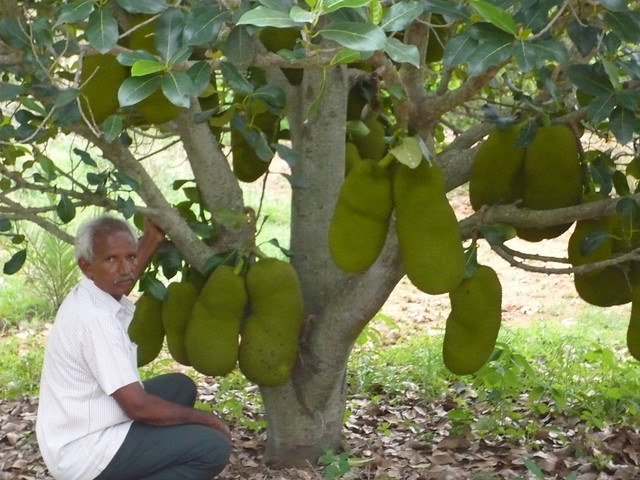
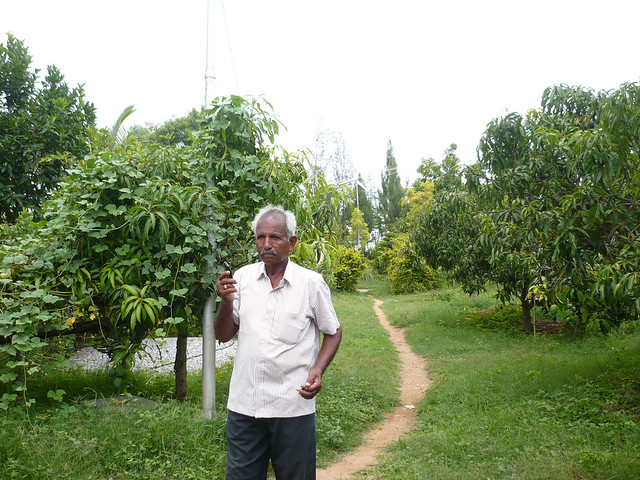
यह कहानी है जयप्पा की, जो कृष्णागिरी जिले के तली गाँव का रहने वाला है। उसके पास 3 एकड़ जमीन है। यह जमीन पथरीली व रेतीली है। वह 15 साल से अपने खेत में रासायनिक खाद का इस्तेमाल नहीं करता है। पूरी तरह जैविक खेती करते हैं, प्राकृतिक व केंचुआ खाद पर आधारित है।
65 वर्षीय जयप्पा शुरू से रासायनिक खेती करते थे पर उनके जीवन में तब नया मोड़ आया जब उन्हें बंगलुरु के कृष्णा प्रसाद मिले। आज देशी बीज मेला और कृषि मेला के माध्यम से जैविक खेती को बढ़ावा देने के लिये कृष्णा प्रसाद की कीर्ति फैल गई है।
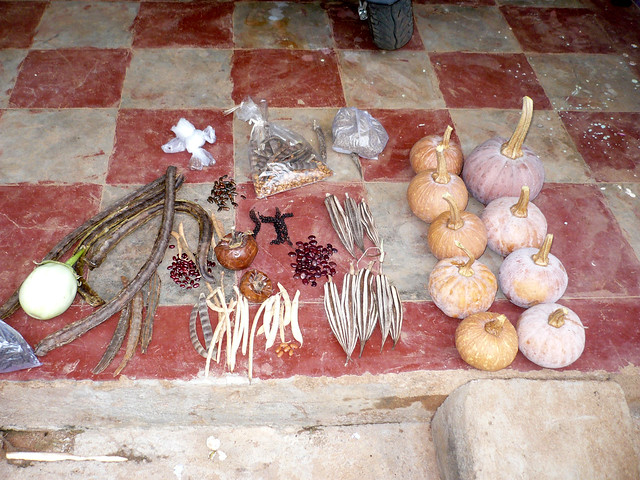
1998 की बात है। एक शाम जयप्पा के गाँव बंगलुरु से कृष्णा प्रसाद आए। उनकी नजर जयप्पा के घर रखे कद्दू पर पड़ी। वह मन्तू कद्दू (स्थानीय नाम) देशी था और बाकियों से कुछ अलग था। उनकी पारखी नजर ने उसे पहचान लिया।
वहाँ से लौटकर कृष्णा प्रसाद ने कद्दू के बारे में लेख लिखा और उसमें जयप्पा का सम्पर्क पता दिया। कुछ ही दिनों में जयप्पा के पास चिट्ठियों का ताँता लग गया और लिफाफे में अतिरिक्त डाक टिकट भी लोगों ने भेजे और इन डाक टिकट के बदले में कद्दू के बीज माँगे। क्योंकि इतनी कम राशि का मनीआर्डर करना उचित नहीं था।
एक कद्दू में करीब 750 बीज निकले। इन बीजों के बदले जयप्पा को 360 रुपए के डाक टिकट प्राप्त हुए। उसने वापसी डाक से लिफाफे में एक-एक, दो-दो बीज सबको भेज दिए और जो डाक टिकट उसे मिले थे, उन्हें कृष्णा प्रसाद को भेज दिये जिन्हें उन्होंने आफिस के कामकाज में इस्तेमाल कर लिया।
इसके बाद से जयप्पा का जैविक खेती व कृष्णा प्रसाद के काम पर भरोसा बढ़ गया। कृष्णा प्रसाद गाँव-गाँव घुमकर जैविक खेती को बढ़ावा देने का काम कर रहे थे। जयप्पा भी जैविक खेती के मिशन में जुड़ गए।
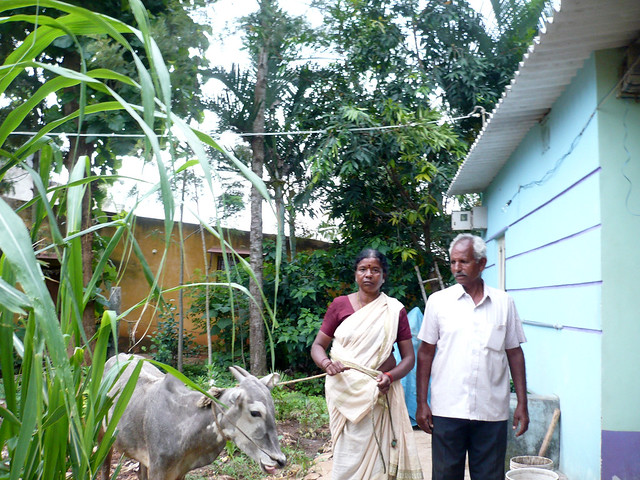
जयप्पा और उनकी पत्नी शारदाम्मा दोनों मिलकर खेती का काम करते हैं। हालांकि जयप्पा ने बातचीत में खेती का सारा श्रेय पत्नी को दिया। जब मैं मई के दूसरे हफ्ते में उनके घर गया तब शारदाम्मा गाय चराने के लिये खेत गई थीं। उनके पास तीन गाएँ हैं। खेत में आम, इमली कटहल, आँवला, मुनगा, जामुन, चीकू, अमरूद, हनुमान फल, नींबू, जम्बू आदि के हरे-भरे पेड़ हैं। आम की कई किस्में थीं- मल्लिका, सेंदुरा, बादामी, तोतापरी, रसपुरी, केसर, बैंगनपल्ली और दशहरी। आम फलों से लदे हुए हैं। इसके साथ वे मोटे अनाज- रागी और दालों की खेती भी करते हैं।
जयप्पा ने घर की बाड़ी में केला, रामफल, नारियल, पुदीना, स्ट्राबेरी, मीठी नीम, मिर्ची, करेला, राजगिरा, पपीता, इलाइची, कटहल, काली मिर्च इत्यादि। साथ ही, कई प्रकार की हरी सब्जियाँ- पालक, लाल भाजी, बैंगन, टमाटर, राजमा, राजगिरा, तुरई और कद्दू।
आम के 120 पेड़, इमली के 5, कटहल के 60, आँवला के 15, नींबू के 5 पेड़ हैं। इनके फलों को वे बंगलुरु में जैविक उत्पादों को खरीदने वाली मार्केटिंग कम्पनी सहज बीज को बाजार से अधिक दामों में बेच देते हैं। केंचुआ खाद से उन्हें करीब 15 हजार सालाना की आय हो जाती है।
जैविक खेती को बढ़ावा देने में बरसों से जुटे शेनाय ने बताया कि जयप्पा के पास दूर-दूर से किसान जैविक खेती के तौर-तरीके सीखने आते हैं और वे कई तरह के देशी बीज व केंचुआ खाद भी उपलब्ध कराते हैं।
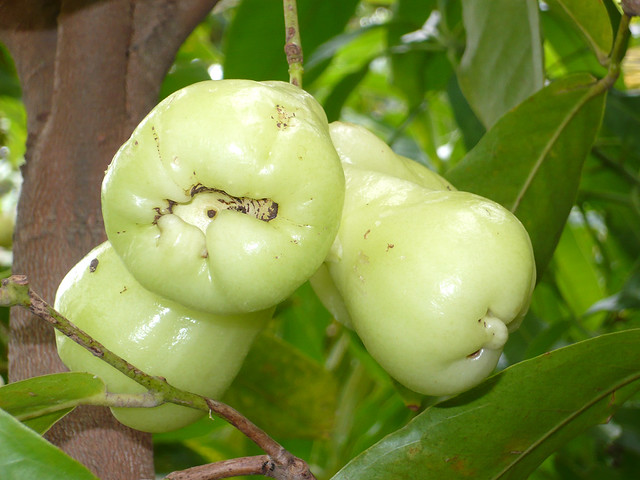
जयप्पा ने एक पेड़ के पास रुककर बताया कि इसे चिड़ियाँ बहुत पसंद करती हैं और यही चिड़ियाँ फसलों को कीट प्रकोप से बचाती हैं। यह वाटर एप्पल का पेड़ था।
जयप्पा ऋषि –मुनियों की तरह पेड़-पौधों के बारे में बहुत जानकारी रखते हैं। वे उनके गुण धर्म से लेकर स्वाद और भोजन बनाने की विधियाँ सब कुछ बताते हैं।
पिछले कुछ समय से खेती-किसानी का संकट गाँव-घर तक पहुँच गया है। इसके मद्देनज़र दक्षिण भारत में तमिलनाडु, कर्नाटक और केरल में जैविक खेती का आन्दोलन जोर पकड़ रहा है। यहाँ बड़े सशक्त किसान आन्दोलन भी रहे हैं। जयप्पा की तरह और भी किसान जैविक खेती की ओर मुड़ रहे हैं, जिनकी तादाद बड़ी है।
रासायनिक खाद से अपनी उर्वर शक्ति खोती जा रही भूमि को फिर से उपजाऊ बनाने के लिये जैविक खेती की जरूरत है। इसके लिये फसल चक्र में बदलाव, हरी खाद व कम्पोस्ट खाद का प्रयोग किया जाता है।
अधिक उत्पादन के लालच में बेजा रासायनिक खादों के इस्तेमाल ने हमारी भूमि की उर्वरक शक्ति व पारिस्थिकी को खासा नुकसान पहुँचाया है, इसे पुनर्जीवित करने की जरूरत शिद्दत से महसूस की जा रही है।
मिट्टी में विभिन्न पोषक तत्वों का सन्तुलन बना रहना जरूरी है। साथ ही मिट्टी में सक्रिय केंचुओं, मित्र कीटों व जीवाणुओं की प्रक्रियाएँ जो मिट्टी को उपजाऊ बनाती हैं, उसे भुरभुरा व अधिक जल संग्रहण क्षमता वाला बनाती हैं। इस दृष्टि से कम्पोस्ट व प्राकृतिक खाद जो गोबर व सड़ी-गली पत्तियों से मिलती है, उपयोगी है।
यानी रासायनिक खाद पर निर्भरता खत्म कर प्राकृतिक खाद, केंचुआ खाद की ओर मुड़ना उचित है। जैविक खेती में हानिकारक कीट प्रकोप से बचने के लिये नीम, राख, गोमूत्र व इनके मिश्रणों आदि का उपयोग किया जाता है।
जैविक खेती को कम खर्च की खेती, सस्ती खेती व आत्मनिर्भरता की खेती से जोड़ना जरूरी है। इसके साथ यदि जल संरक्षण होगा तो हरियाली बढ़ेगी तभी पशु रखे जा सकेंगे तभी प्राकृतिक व जैविक खाद प्राप्त हो सकेगी, जो जयप्पा के पास सहज उपलब्ध है।
जयप्पा की जिन्दगी अब बदल गई है। उसका पक्का घर बन गया है। उसके दो बेटे बंगलुरु में नौकरी कर रहे हैं जो अब खेती सम्भलने के बाद नौकरी छोड़कर अपनी खेती में काम करने की सोच रहे हैं। माँ-बाप से दूर रहकर वे खुश नहीं हैं। यह बताते हुए जयप्पा की आँखों में चमक आ जाती है।
कुल मिलाकर, यह कहा जा सकता है कि खेत में मेहनत करके जैविक खेती के साथ अच्छे से जिन्दगी जी सकते हैं। जैविक खेती जयप्पा जैसे छोटे किसानों के लिये बहुत उपयोगी है। इससे किसान आत्मनिर्भर बनेंगे। पर्यावरण बचेगा और साथ ही उजड़ते गाँव भी बचेंगे।


तमिलनाडु के एक छोटे गाँव का गरीब किसान अब समृद्ध हो गया है। ज्यादा लागत और कम उपज वाली रासायनिक खेती को छोड़कर वह जैविक खेती की ओर मुड़ा और सफलता की सीढ़ियाँ चढ़ता गया। अब वह खुद ही नहीं बल्कि दूसरों को भी जैविक खेती के तौर-तरीके सिखाता है। वह एक गुमनाम किसान नहीं, जाना-माना जैविक खेती का ट्रेनर बन गया है।यह कहानी है जयप्पा की, जो कृष्णागिरी जिले के तली गाँव का रहने वाला है। उसके पास 3 एकड़ जमीन है। यह जमीन पथरीली व रेतीली है। वह 15 साल से अपने खेत में रासायनिक खाद का इस्तेमाल नहीं करता है। पूरी तरह जैविक खेती करते हैं, प्राकृतिक व केंचुआ खाद पर आधारित है।
65 वर्षीय जयप्पा शुरू से रासायनिक खेती करते थे पर उनके जीवन में तब नया मोड़ आया जब उन्हें बंगलुरु के कृष्णा प्रसाद मिले। आज देशी बीज मेला और कृषि मेला के माध्यम से जैविक खेती को बढ़ावा देने के लिये कृष्णा प्रसाद की कीर्ति फैल गई है।
1998 की बात है। एक शाम जयप्पा के गाँव बंगलुरु से कृष्णा प्रसाद आए। उनकी नजर जयप्पा के घर रखे कद्दू पर पड़ी। वह मन्तू कद्दू (स्थानीय नाम) देशी था और बाकियों से कुछ अलग था। उनकी पारखी नजर ने उसे पहचान लिया।
वहाँ से लौटकर कृष्णा प्रसाद ने कद्दू के बारे में लेख लिखा और उसमें जयप्पा का सम्पर्क पता दिया। कुछ ही दिनों में जयप्पा के पास चिट्ठियों का ताँता लग गया और लिफाफे में अतिरिक्त डाक टिकट भी लोगों ने भेजे और इन डाक टिकट के बदले में कद्दू के बीज माँगे। क्योंकि इतनी कम राशि का मनीआर्डर करना उचित नहीं था।
एक कद्दू में करीब 750 बीज निकले। इन बीजों के बदले जयप्पा को 360 रुपए के डाक टिकट प्राप्त हुए। उसने वापसी डाक से लिफाफे में एक-एक, दो-दो बीज सबको भेज दिए और जो डाक टिकट उसे मिले थे, उन्हें कृष्णा प्रसाद को भेज दिये जिन्हें उन्होंने आफिस के कामकाज में इस्तेमाल कर लिया।
इसके बाद से जयप्पा का जैविक खेती व कृष्णा प्रसाद के काम पर भरोसा बढ़ गया। कृष्णा प्रसाद गाँव-गाँव घुमकर जैविक खेती को बढ़ावा देने का काम कर रहे थे। जयप्पा भी जैविक खेती के मिशन में जुड़ गए।
जयप्पा और उनकी पत्नी शारदाम्मा दोनों मिलकर खेती का काम करते हैं। हालांकि जयप्पा ने बातचीत में खेती का सारा श्रेय पत्नी को दिया। जब मैं मई के दूसरे हफ्ते में उनके घर गया तब शारदाम्मा गाय चराने के लिये खेत गई थीं। उनके पास तीन गाएँ हैं। खेत में आम, इमली कटहल, आँवला, मुनगा, जामुन, चीकू, अमरूद, हनुमान फल, नींबू, जम्बू आदि के हरे-भरे पेड़ हैं। आम की कई किस्में थीं- मल्लिका, सेंदुरा, बादामी, तोतापरी, रसपुरी, केसर, बैंगनपल्ली और दशहरी। आम फलों से लदे हुए हैं। इसके साथ वे मोटे अनाज- रागी और दालों की खेती भी करते हैं।
जयप्पा ने घर की बाड़ी में केला, रामफल, नारियल, पुदीना, स्ट्राबेरी, मीठी नीम, मिर्ची, करेला, राजगिरा, पपीता, इलाइची, कटहल, काली मिर्च इत्यादि। साथ ही, कई प्रकार की हरी सब्जियाँ- पालक, लाल भाजी, बैंगन, टमाटर, राजमा, राजगिरा, तुरई और कद्दू।
आम के 120 पेड़, इमली के 5, कटहल के 60, आँवला के 15, नींबू के 5 पेड़ हैं। इनके फलों को वे बंगलुरु में जैविक उत्पादों को खरीदने वाली मार्केटिंग कम्पनी सहज बीज को बाजार से अधिक दामों में बेच देते हैं। केंचुआ खाद से उन्हें करीब 15 हजार सालाना की आय हो जाती है।
जैविक खेती को बढ़ावा देने में बरसों से जुटे शेनाय ने बताया कि जयप्पा के पास दूर-दूर से किसान जैविक खेती के तौर-तरीके सीखने आते हैं और वे कई तरह के देशी बीज व केंचुआ खाद भी उपलब्ध कराते हैं।जयप्पा ने एक पेड़ के पास रुककर बताया कि इसे चिड़ियाँ बहुत पसंद करती हैं और यही चिड़ियाँ फसलों को कीट प्रकोप से बचाती हैं। यह वाटर एप्पल का पेड़ था।
जयप्पा ऋषि –मुनियों की तरह पेड़-पौधों के बारे में बहुत जानकारी रखते हैं। वे उनके गुण धर्म से लेकर स्वाद और भोजन बनाने की विधियाँ सब कुछ बताते हैं।
पिछले कुछ समय से खेती-किसानी का संकट गाँव-घर तक पहुँच गया है। इसके मद्देनज़र दक्षिण भारत में तमिलनाडु, कर्नाटक और केरल में जैविक खेती का आन्दोलन जोर पकड़ रहा है। यहाँ बड़े सशक्त किसान आन्दोलन भी रहे हैं। जयप्पा की तरह और भी किसान जैविक खेती की ओर मुड़ रहे हैं, जिनकी तादाद बड़ी है।
रासायनिक खाद से अपनी उर्वर शक्ति खोती जा रही भूमि को फिर से उपजाऊ बनाने के लिये जैविक खेती की जरूरत है। इसके लिये फसल चक्र में बदलाव, हरी खाद व कम्पोस्ट खाद का प्रयोग किया जाता है।
अधिक उत्पादन के लालच में बेजा रासायनिक खादों के इस्तेमाल ने हमारी भूमि की उर्वरक शक्ति व पारिस्थिकी को खासा नुकसान पहुँचाया है, इसे पुनर्जीवित करने की जरूरत शिद्दत से महसूस की जा रही है।
मिट्टी में विभिन्न पोषक तत्वों का सन्तुलन बना रहना जरूरी है। साथ ही मिट्टी में सक्रिय केंचुओं, मित्र कीटों व जीवाणुओं की प्रक्रियाएँ जो मिट्टी को उपजाऊ बनाती हैं, उसे भुरभुरा व अधिक जल संग्रहण क्षमता वाला बनाती हैं। इस दृष्टि से कम्पोस्ट व प्राकृतिक खाद जो गोबर व सड़ी-गली पत्तियों से मिलती है, उपयोगी है।
यानी रासायनिक खाद पर निर्भरता खत्म कर प्राकृतिक खाद, केंचुआ खाद की ओर मुड़ना उचित है। जैविक खेती में हानिकारक कीट प्रकोप से बचने के लिये नीम, राख, गोमूत्र व इनके मिश्रणों आदि का उपयोग किया जाता है।
जैविक खेती को कम खर्च की खेती, सस्ती खेती व आत्मनिर्भरता की खेती से जोड़ना जरूरी है। इसके साथ यदि जल संरक्षण होगा तो हरियाली बढ़ेगी तभी पशु रखे जा सकेंगे तभी प्राकृतिक व जैविक खाद प्राप्त हो सकेगी, जो जयप्पा के पास सहज उपलब्ध है।
जयप्पा की जिन्दगी अब बदल गई है। उसका पक्का घर बन गया है। उसके दो बेटे बंगलुरु में नौकरी कर रहे हैं जो अब खेती सम्भलने के बाद नौकरी छोड़कर अपनी खेती में काम करने की सोच रहे हैं। माँ-बाप से दूर रहकर वे खुश नहीं हैं। यह बताते हुए जयप्पा की आँखों में चमक आ जाती है।
कुल मिलाकर, यह कहा जा सकता है कि खेत में मेहनत करके जैविक खेती के साथ अच्छे से जिन्दगी जी सकते हैं। जैविक खेती जयप्पा जैसे छोटे किसानों के लिये बहुत उपयोगी है। इससे किसान आत्मनिर्भर बनेंगे। पर्यावरण बचेगा और साथ ही उजड़ते गाँव भी बचेंगे। 
Thursday, July 17, 2014
ARTICLE : Fact: Most Farmers Are Not Rich
photo credit: Rosewoman
by Brenda on July 16, 2014
re
We bought a farm, worked it hard, tried to do the full-time-farming thing. We poured so much into our farm–time, energy, money, debt. We had good products, great customers, and yet, we didn’t make it. The farm didn’t pay for itself. My husband had to go back to work, and we decided that we were unable to continue farming and maintain my husband’s career, the commute, the debt, and a healthy family life.
- We sold eggs for $6.50 per dozen and though we sold out, we didn’t make enough to cover our expenses. I have people telling me on my Facebook page that even $5 per dozen for eggs is too expensive and unrealistic.
- We sold raw milk for $10 per gallon and didn’t make enough to cover our expenses. So many people complain about this cost, too, as if it is an outrageous price. The most recent negative comment I got about this was: “And we wonder why people go for the industrial milk…”
- We sold whole chickens for $5.50 per pound and had such a hard time selling our chickens (which barely brought in any profit anyways) at the farmer’s market.
- We also sold beef, pork, duck, goose, as well as some fresh produce, homemade spice mixes, homemade candles, and a variety of organic grocery items in our farm store. It took so much time to manage all of the details of our farm–and yet people told me over and over that to make enough income, we would need to “diversify” more. Diversify more? We were busy with so much to manage already!
The Truth is: Farming isn’t a good business venture, but it should be. Why shouldn’t people make money farming? People who build furniture make money, right? People who design computers make money, right? Why shouldn’t the people who grow our food make money?“Maybe people should wake up to the fact this isn’t a good
business venture… It is simply a way to provide for your
family and a few others. It’s when people try to turn this into a
business that the costs sky rocket.”
“If you are running a farm the milk cow is only a portion of it…….even stores and other businesses take losses on one product or service while marking up others that can handle the higher profit margin and it all evens out as a whole.”The Truth is: I get people telling me that every product on the farm ought to be a “loss leader”–milk, eggs, chicken, etc. I am not sure how these people expect the farmer to make any income or even cover the cost of feed, if every product loses money for the farmer. There is not one single food product that “can handle the higher profit margin” because grocery store food prices are SO distorted because of government subsidies. Most people have no clue how much food production actually costs.
“ppl will continue with store bought eggs due to the greediness of the up and coming farmer. Farming is about getting in tune with nature, soil, water and plant life, and sharing the spoils to keep ppl from starving. You want ppl to help support your greedy, selfish lifestyle.”The Truth is: Farmers who are trying to simply make a living off of farming are not “greedy.” Farmers should not be expected to be self-sacrificing people who simply do their job because they love nature. What if every job out there was treated this way? Doctors ought to share their time and skill set to keep people from being ill. Clothing manufacturers should give away clothes to keep people from being naked. Authors and publishers should give away books so that nobody ever has to go without a good book to read. It’s ridiculous, right? There are true costs in every industry. And the laborer deserves a fair wage. Farmers work hard. They aren’t greedy or selfish when they charge realistic prices for their goods, after assessing the true costs and factoring in their time and labor.
“Most farmers never got rich farming. In hard times farmers had no cash, but they had food. So while the rest of us are being forced to pay exorbitant prices for grass fed beef, pastured eggs and gmo/soy you have all that on your farm, you are truly blessed.”The Truth is: Farmers don’t get rich off of farming, but they should be able to survive, pay the bills, make enough to pay for their time, and keep on farming for years to come. Farmers don’t get food off of their farm for free, and the money it costs to raise this food doesn’t magically appear somehow. When we were farming, we would pay $1,000-$2,000 per delivery of feed–and we were needing to order that much feed at least every 2 weeks. That’s $2,000-$4,000 per month, and farmers can’t just come up with that money. In hard times, they still have to make enough income to raise the food to have the food.
“Maybe get a day job along w your laying hens, like the rest of us, instead of over charging for eggs.”The Truth is: Most farmers DO have day jobs, which is really sad. This person was claiming that $5 per dozen for organic eggs was “over charging for eggs.” $5 per dozen is not bringing in much income for the farmer at all.
Someone who was saying eggs should not cost more than $3 per dozen: “…my husband makes very little over the cost of raising these chickens, MUCH less than minimum wage, but he does it because we feel it’s important to raise and grow good healthy food using methods that improve, rather than deplete our soil and environment.”The Truth is: I’m glad that these people have a good reason for wanting to raise chickens well….but does that make it OK that, as she’s admitting, her husband makes “MUCH less than minimum wage” for this job? Can we all agree that raising chickens for eggs is a JOB that is worthy of a fair wage for the time and labor put into it?
I want to share these statistics, for all of the people out there who truly believe that farmers are rich or greedy. Notice that the “Median Farm Income” is Negative. People, this is not ok. Farmers have to get a “day job” to support their hobby of growing your food.
The prediction for 2014 doesn’t look any better:
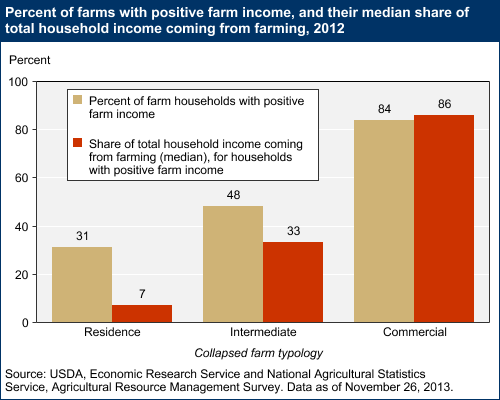
And notice this next chart. The document states: “Farm income contributes little to the annual income of farm households operating residence farms, is a secondary source of income for households with intermediate farms, and is a primary source of income for those with commercial farms.”
So only 31% of small family farms make any profit at all—-and that profit makes up only 7% of their annual income.
The document also states: “Median farm household income increased each year from 2008 to 2012. The increase largely reflects greater income from off-farm sources, where most farm households earn all of their income.“
Can we all agree, this is just wrong? That farmers, who produce the food that nourishes us, should be able to make a living at what they do? That they shouldn’t have to work 40 hours per week at a day job, and then go home, exhausted, and raise livestock and work in the garden? That no human being should have to sacrifice every bit of their time so that the rest of the humans can work, rest in the evenings and eat???
If you would like to read more, visit the USDA website here.
Farmers are not rich. Farmers work hard, and more often than not, are giving their food away. It’s not ok. They have to pay the mortgage, the electricity, the feed bill, the cost of animals and seeds, and they deserve to make an income for their labor. Please stand with me in making a difference. Read about How to Bless a Farmer here. Tip your farmer. Pay fair prices for their food items. Do not expect that eggs, milk, meat or vegetables will cost the same as artificially priced grocery store foods.
Let’s work together to make farming an viable career!!
SOURCE: http://www.wellfedhomestead.com/fact-most-farmers-are-not-richMonday, September 23, 2013
ARTICLE : ‘GM Crops Won’t Solve India’s Food Crisis’
9:00 am IST Sep 22, 2013 By Shanoor Seervai
Proponents of genetically modified food say GM technology will boost production to meet India’s food requirements, but critics argue that it is unsustainable, and that the main challenge is not one of production but distribution.
Dilnavaz Variava doesn’t believe that GM food will address India’s food crisis. She is honorary convener for consumer issues for the Alliance for Sustainable and Holistic Agriculture, an alliance of farmers, scientists, economists, non-governmental organizations and citizens who advocate for ecologically and economically sustainable agriculture.
Ms. Variava has worked for a range of organizations, including the World Wildlife Fund India, where she was chief executive, and the Bombay Natural History Society. She has also served on several federal government committees as well as one in Maharashtra for the development of agriculture.
Ms. Variava spoke with The Wall Street Journal’s India Real Time about GM food in India. Edited excerpts:
The Wall Street Journal: Parliament’s passage of the Food Security Bill reflects the urgency of addressing the food security challenge. Would genetically modified food do this?
Dilnavaz Variava: India has enough food grain — almost two-and-a-half times the required buffer stock — and yet 200 million Indians go hungry. The problem of sufficiency is not one of production, but of economic and physical access, which the Food Security Bill attempts to address. Poverty, mounds of rotting food grain, wastage and leakages in the Public Distribution System are the real causes of food insecurity. GM food cannot address this.
WSJ: Is there evidence from other countries that GM food improves food security?
Ms. Variava: Macroeconomic data for the largest adopters of GM food indicate the opposite. In the U.S., food insecurity has risen from 12% in pre-GM 1995 to 15% in 2011. In Paraguay, where nearly 65% of land is under GM crops, hunger increased from 12.6% in 2004-06 to 25.5% in 2010-12. In Brazil and Argentina, GM food has not reduced hunger. In any event, GM does not increase yields, as the Union of Concerned Scientists established through a review of 12 years of GM in the U.S.
WSJ: How does GM food differ in quality from non-GM food?
Ms. Variava: About 99% of all GM crops have either one or both of two traits that make food unsafe: a pesticide-producing toxin (Bt) present in every cell of the plant and a herbicide tolerant trait that enables the plant to withstand herbicides used to kill weeds. While food safety regulators have cleared GM foods as safe, many independent scientists disagree. Their studies point to health risks: allergies, cancer, reproductive, renal, pancreatic and hepatic disorders. They say regulators give safety assurances based on studies which the GM industry conducts for a maximum period of 90 days on lab rats. This corresponds to a human life span of less than 15 years, which is too short for long-term health effects such as organ damage or cancer to manifest.
WSJ: In India, why did the Supreme Court-appointed Technical Expert Committee call for a moratorium on field trials of GM crops in July?
Ms. Variava: The TEC majority report by five scientists from the fields of molecular biology, toxicology, nutrition science and biodiversity called for an indefinite moratorium on field trials, stating that ‘the regulatory system has major gaps.’ They concluded that the quality of information in several GM applications was far below that necessary for rigorous evaluation. They recommended a moratorium on field trials for Bt in food crops until there was more definitive information on its long-term safety, and for crops for which India is a center of origin/diversity. They also recommended a ban on the release of ‘herbicide tolerant’ crops, which are inadvisable on socioeconomic grounds in a country where farms are small and weeding provides income to millions of people.
WSJ: Does the report take food security into account?
Ms. Variava: Yes, the report notes that although India has a food surplus in production terms, one-third of the world’s malnourished children live here. It does not see GM as the answer to this.
WSJ: Does it make sense to ban even field trials of GM food?
Ms. Variava: Field trials involve open-air releases of GM. Given that rice and wheat survived their supposed destruction after field trials in U.S. and caused import bans leading to losses of millions of dollars to U.S. farmers, field trials are not harmless scientific experiments. Banning field trials makes sense until a strong biosafety and liability regime is in place.
WSJ: Isn’t India taking regulatory steps to promote the safe use of modern biotechnology, for example with the proposed Biotechnology Regulatory Authority of India Bill?
Ms. Variava: The BRAI Bill appears to be promoting rather than regulating GM. It proposes a single window clearance, with power to clear GM crops dangerously concentrated in the hands of just five people. All its other committees are merely advisory. It will overrule the constitutional powers of state governments over agriculture and circumscribe the Right to Information and legal redressal. It does not mandate long-term studies, assure labeling and post-release health monitoring, or have adequate punitive provisions. There is no mandatory consideration of safer alternatives or preliminary need assessment based on socioeconomic factors. GM crops are input intensive, requiring adequate fertilizers and timely irrigation. With over 70% of India’s farmers being small and impoverished, and 65% dependent on the vagaries of the monsoon, GM is a high cost, high debt and high risk technology for India. The BRAI Bill does not ensure caution for this unpredictable and irreversible technology.
WSJ: What would economically and environmentally sustainable agriculture for India look like?
Ms. Variava: A World Bank commissioned study found that agro-ecological approaches and not GM provide the best solution to the world’s food crisis.In March 2011, the U.N. Special Rapporteur on the Right to Food also reported that small scale farmers could double food production within 5 to 10 years by agro-ecological farming.
An Associated Chambers of Commerce and Industry of India study for West Bengal found that organic farming could increase net per capita income of a farmer in the state by 250%, lead to wealth accumulation of 120 billion rupees ($1.9 billion), generate exports worth 5.5 billion rupees ($87 million) and create nearly two million employment opportunities over five years.
In Andhra Pradesh, Community Managed Sustainable Agriculture was started in 2005-06. It promoted ecologically and economically sound agriculture with state government and World Bank support. About 10,000 villages with one million farmers practice non-pesticidal management on over 3.5 million acres. Pesticide use in the state has decreased by more than 45%. Net income increases were 3,000 to 15,000 rupees per acre, in addition to meeting a household’s food needs.
Shanoor Seervai is a freelance writer based in Bombay. Like India Real Time on Facebook here and follow us on Twitter @WSJIndia.
SOURCE : http://blogs.wsj.com/indiarealtime/2013/09/22/gm-crops-wont-solve-indias-food-crisis/tab/comments/
Economy & Business | The Wall Street Journal
Earlier this month, India’s Parliament passed a bill aimed at delivering subsidized food to around 800 million people. While well-intentioned, the law is expensive and has raised questions about whether India produces enough food to meet demand.
Dilnavaz Variava doesn’t believe that GM food will address India’s food crisis. She is honorary convener for consumer issues for the Alliance for Sustainable and Holistic Agriculture, an alliance of farmers, scientists, economists, non-governmental organizations and citizens who advocate for ecologically and economically sustainable agriculture.
Ms. Variava has worked for a range of organizations, including the World Wildlife Fund India, where she was chief executive, and the Bombay Natural History Society. She has also served on several federal government committees as well as one in Maharashtra for the development of agriculture.
Ms. Variava spoke with The Wall Street Journal’s India Real Time about GM food in India. Edited excerpts:
The Wall Street Journal: Parliament’s passage of the Food Security Bill reflects the urgency of addressing the food security challenge. Would genetically modified food do this?
Dilnavaz Variava: India has enough food grain — almost two-and-a-half times the required buffer stock — and yet 200 million Indians go hungry. The problem of sufficiency is not one of production, but of economic and physical access, which the Food Security Bill attempts to address. Poverty, mounds of rotting food grain, wastage and leakages in the Public Distribution System are the real causes of food insecurity. GM food cannot address this.
WSJ: Is there evidence from other countries that GM food improves food security?
Ms. Variava: Macroeconomic data for the largest adopters of GM food indicate the opposite. In the U.S., food insecurity has risen from 12% in pre-GM 1995 to 15% in 2011. In Paraguay, where nearly 65% of land is under GM crops, hunger increased from 12.6% in 2004-06 to 25.5% in 2010-12. In Brazil and Argentina, GM food has not reduced hunger. In any event, GM does not increase yields, as the Union of Concerned Scientists established through a review of 12 years of GM in the U.S.
WSJ: How does GM food differ in quality from non-GM food?
Ms. Variava: About 99% of all GM crops have either one or both of two traits that make food unsafe: a pesticide-producing toxin (Bt) present in every cell of the plant and a herbicide tolerant trait that enables the plant to withstand herbicides used to kill weeds. While food safety regulators have cleared GM foods as safe, many independent scientists disagree. Their studies point to health risks: allergies, cancer, reproductive, renal, pancreatic and hepatic disorders. They say regulators give safety assurances based on studies which the GM industry conducts for a maximum period of 90 days on lab rats. This corresponds to a human life span of less than 15 years, which is too short for long-term health effects such as organ damage or cancer to manifest.
WSJ: In India, why did the Supreme Court-appointed Technical Expert Committee call for a moratorium on field trials of GM crops in July?
Ms. Variava: The TEC majority report by five scientists from the fields of molecular biology, toxicology, nutrition science and biodiversity called for an indefinite moratorium on field trials, stating that ‘the regulatory system has major gaps.’ They concluded that the quality of information in several GM applications was far below that necessary for rigorous evaluation. They recommended a moratorium on field trials for Bt in food crops until there was more definitive information on its long-term safety, and for crops for which India is a center of origin/diversity. They also recommended a ban on the release of ‘herbicide tolerant’ crops, which are inadvisable on socioeconomic grounds in a country where farms are small and weeding provides income to millions of people.
WSJ: Does the report take food security into account?
Ms. Variava: Yes, the report notes that although India has a food surplus in production terms, one-third of the world’s malnourished children live here. It does not see GM as the answer to this.
WSJ: Does it make sense to ban even field trials of GM food?
Ms. Variava: Field trials involve open-air releases of GM. Given that rice and wheat survived their supposed destruction after field trials in U.S. and caused import bans leading to losses of millions of dollars to U.S. farmers, field trials are not harmless scientific experiments. Banning field trials makes sense until a strong biosafety and liability regime is in place.
WSJ: Isn’t India taking regulatory steps to promote the safe use of modern biotechnology, for example with the proposed Biotechnology Regulatory Authority of India Bill?
Ms. Variava: The BRAI Bill appears to be promoting rather than regulating GM. It proposes a single window clearance, with power to clear GM crops dangerously concentrated in the hands of just five people. All its other committees are merely advisory. It will overrule the constitutional powers of state governments over agriculture and circumscribe the Right to Information and legal redressal. It does not mandate long-term studies, assure labeling and post-release health monitoring, or have adequate punitive provisions. There is no mandatory consideration of safer alternatives or preliminary need assessment based on socioeconomic factors. GM crops are input intensive, requiring adequate fertilizers and timely irrigation. With over 70% of India’s farmers being small and impoverished, and 65% dependent on the vagaries of the monsoon, GM is a high cost, high debt and high risk technology for India. The BRAI Bill does not ensure caution for this unpredictable and irreversible technology.
WSJ: What would economically and environmentally sustainable agriculture for India look like?
Ms. Variava: A World Bank commissioned study found that agro-ecological approaches and not GM provide the best solution to the world’s food crisis.In March 2011, the U.N. Special Rapporteur on the Right to Food also reported that small scale farmers could double food production within 5 to 10 years by agro-ecological farming.
An Associated Chambers of Commerce and Industry of India study for West Bengal found that organic farming could increase net per capita income of a farmer in the state by 250%, lead to wealth accumulation of 120 billion rupees ($1.9 billion), generate exports worth 5.5 billion rupees ($87 million) and create nearly two million employment opportunities over five years.
In Andhra Pradesh, Community Managed Sustainable Agriculture was started in 2005-06. It promoted ecologically and economically sound agriculture with state government and World Bank support. About 10,000 villages with one million farmers practice non-pesticidal management on over 3.5 million acres. Pesticide use in the state has decreased by more than 45%. Net income increases were 3,000 to 15,000 rupees per acre, in addition to meeting a household’s food needs.
SOURCE : http://blogs.wsj.com/indiarealtime/2013/09/22/gm-crops-wont-solve-indias-food-crisis/tab/comments/
Tuesday, April 2, 2013
Write up : How Much To Plant To Provide A Year’s Worth Of Food
by Brenda on April 1, 2013
Do you know how much your family eats in a year’s time? As a farmer’s wife, I am keenly aware of how much meat, poultry, eggs, honey and dairy we consume. Raising enough food to meet our own needs, as well as an abundance to sell is an integral part of our life. To be honest, it hasn’t been the same with vegetables. I’ve at least attempted a garden most of the years that we have been married. Some years, I was more successful than others. If I didn’t grow it, I bought some produce from local farmers and preserved some foods for the winter: salsa, canned tomatoes, strawberry jam, pickles, and lots of frozen veggies and fruit. Still, I’ve always depended on going grocery shopping. I’ve never preserved everything that we needed for the winter, nor have I ever grown enough to meet all of our family’s needs.
Not long ago, people had to think about how much to grow for the year. They had to plan ahead, save seeds, plant enough for their family, preserve enough, etc. It wasn’t just a hobby. It didn’t take up a 4 foot by 4 foot square in their backyard, next to the beautifully fertilized lawn. It was their yard. It didn’t take a back burner in their spring and summer plans, after camping trips, barbecues and swimming parties. These are all good things, but people had to think about survival first and foremost. Partying came after the harvest. Now days, most of us party first, fertilize our lawns second, go to the grocery store and depend on other people to grow our food (and expect it to be cheap), and then we think about gardening, maybe, if ever, as a hobby.
I loved Joel Salatin’s talk @ The Healthy Life Summit. I pretty much love everything Joel says. This quote got me thinking:
We’re all a part of agriculture. Even if our part is just being a consumer, getting spinach and rice at the grocery store, we would not survive without agriculture. I, personally, want to be more involved than that. I want to know how much my family eats and how much we need to grow to supply that need. I want to work towards the goal of a completely self-sustaining homestead.
Sunset’s Vegetable Garden Book (from 1944)
The Gardener’s A-Z Guide to Growing Organic Food
Want to know how much to plant per person? This is what I found:
Artichokes1-4 plants per person
Asparagus10-12 plants per person
Beans, Bush10-20 plants per person
Beans, Lima10-20 plants per person
Beans, Pole10-20 plants per person
Beets10-20 plants per person
Broccoli5-10 plants per person
Brussels Sprouts2-8 plants per person
Cabbage3-10 plants per person
Carrots10-40 plants per person
Cauliflower3-5 plants per person
Celeriac1-5 plants per person
Celery3-8 plants per person
Corn12-40 plants per person
Cucumbers3-5 plants per person
Eggplant1 plant per person, plus 2-3 extra per family
Kale1 5’ row per person
Lettuce10-12 plants per person
Melons2-6 plants per person
Onions40-80 plants per person
Peas25-60 plants per person
Peppers5-6 plants per person
Potatoes10-30 plants per person
Pumpkins1 plant per person
Rhubarb2-3 crowns per person
Spinach10-20 plants per person
Summer Squash2-4 plants per person
Winter Squash2 plants per person
Sweet Potatoes5 plants per person
Tomatoes2-5 plants per person
Obviously, all of this will vary based on your family’s size, tastes, allergies and climate. If you’re on the GAPS Diet, you’ll obviously plant more squash and leafy greens, and no corn, potatoes or sweet potatoes. If you can grow some of these vegetables year-round, you will be able to grow smaller rows. If you’re doing Square Foot Gardening, you may be able to plant things closer together & thus take up less space in your garden. Never the less, I believe that we all ought to be considering how much we use in a year and how much needs to be grown to supply our family’s needs (whether we are the ones doing the growing or not).
If you like analyzing this kind of information, you might like the charts in my Garden & Preservation Planner!
What are you planting in your garden this year?
More Reading About Gardening
Source: Well Fed Homestead
Image: Dave Shafer
SOURCE : http://www.wellfedhomestead.com/how-much-should-you-plant-in-your-garden-to-provide-a-years-worth-of-food
Sunday, September 30, 2012
Russia's small-scale organic agriculture model may hold the key to feeding the world
Saturday, September 29, 2012 by: Jonathan Benson, staff writer
(NaturalNews) Imagine living in a country where having the freedom to cultivate your own land, tax-free and without government interference, is not only common but also encouraged for the purpose of promoting individual sovereignty and strong, healthy communities. Now imagine that in this same country, nearly all of your neighbors also cultivate their own land as part of a vast network of decentralized, self-sustaining, independent "eco-villages" that produce more than enough food to feed the entire country.
You might be thinking this sounds like some kind of utopian interpretation of historical America, but the country actually being described here is modern-day Russia. It turns out that Russia's current agricultural model is one that thrives as a result of the millions of small-scale, family-owned and -operated, organically-cultivated farms that together produce the vast majority of the food consumed throughout the country.
According to The Bovine, Russia's Private Garden Plot Act, which was signed into law back in 2003, entitles every Russian citizen to a private plot of land, free of charge, ranging in size from 2.2 acres to 6.8 acres. Each plot can be used for growing food, or for simply vacationing or relaxing, and the government has agreed not to tax this land. And the result of this effort has been phenomenal, as Russian families collectively grow practically all the food they need.
"Essentially, what Russian gardeners do is demonstrate that gardeners can feed the world -- and you do not need any GMOs, industrial farms, or any other technological gimmicks to guarantee everybody's got enough food to eat," writes Leonid Sharashkin, editor of the English version of the The Ringing Cedars series, a book collection that explains the history behind this effort to reconnect people with the earth and nature. (http://www.ringingcedars.com/)
"Bear in mind that Russia only has 110 days of growing season per year -- so in the U.S., for example, gardeners' output could be substantially greater. Today; however, the area taken up by lawns in the U.S. is two times greater than that of Russia's gardens -- and it produces nothing but a multi-billion-dollar lawn care industry."
The backyard gardening model is so effective throughout Russia that total output represents more than 50 percent of the nation's entire agricultural output. Based on 2004 figures, the collective value of all the backyard produce grown in Russia is $14 billion, or 2.3 percent of Russia's gross domestic product (GDP) -- and this number only continues to increase as more and more Russians join the eco-village movement.
Sources for this article include:
http://thebovine.wordpress.com
http://www.proliberty.com/observer/20080211.htm
SOURCE : http://www.naturalnews.com/037366_Russia_home_gardens_food_production.html#ixzz3cgHSNvwi
(NaturalNews) Imagine living in a country where having the freedom to cultivate your own land, tax-free and without government interference, is not only common but also encouraged for the purpose of promoting individual sovereignty and strong, healthy communities. Now imagine that in this same country, nearly all of your neighbors also cultivate their own land as part of a vast network of decentralized, self-sustaining, independent "eco-villages" that produce more than enough food to feed the entire country.
You might be thinking this sounds like some kind of utopian interpretation of historical America, but the country actually being described here is modern-day Russia. It turns out that Russia's current agricultural model is one that thrives as a result of the millions of small-scale, family-owned and -operated, organically-cultivated farms that together produce the vast majority of the food consumed throughout the country.
Do Russians have more food freedom, independence than Americans?
A far cry from the unsustainable, chemical-dependent, industrialized agriculture system that dominates the American landscape today, Russia's agricultural system, which is not technically a system at all, is run by the people and for the people. Thanks to government policies there that actually encourage autonomous family farming, rather than cater to the greed of chemical and biotechnology companies like they do here in the states, the vast majority of Russians are able and willing to grow their own food on privately-owned family plots known as "dachas."According to The Bovine, Russia's Private Garden Plot Act, which was signed into law back in 2003, entitles every Russian citizen to a private plot of land, free of charge, ranging in size from 2.2 acres to 6.8 acres. Each plot can be used for growing food, or for simply vacationing or relaxing, and the government has agreed not to tax this land. And the result of this effort has been phenomenal, as Russian families collectively grow practically all the food they need.
"Essentially, what Russian gardeners do is demonstrate that gardeners can feed the world -- and you do not need any GMOs, industrial farms, or any other technological gimmicks to guarantee everybody's got enough food to eat," writes Leonid Sharashkin, editor of the English version of the The Ringing Cedars series, a book collection that explains the history behind this effort to reconnect people with the earth and nature. (http://www.ringingcedars.com/)
Most food in Russia comes from backyard gardens
Back in 1999, it was estimated that 35 million small family plots throughout Russia, operated by 105 million people, or 71 percent of the Russian population, were producing about 50 percent of the nation's milk supply, 60 percent of its meat supply, 87 percent of its berry and fruit supply, 77 percent of its vegetable supply, and an astounding 92 percent of its potato supply. The average Russian citizen, in other words, is fully empowered under this model to grow his own food, and meet the needs of his family and local community."Bear in mind that Russia only has 110 days of growing season per year -- so in the U.S., for example, gardeners' output could be substantially greater. Today; however, the area taken up by lawns in the U.S. is two times greater than that of Russia's gardens -- and it produces nothing but a multi-billion-dollar lawn care industry."
The backyard gardening model is so effective throughout Russia that total output represents more than 50 percent of the nation's entire agricultural output. Based on 2004 figures, the collective value of all the backyard produce grown in Russia is $14 billion, or 2.3 percent of Russia's gross domestic product (GDP) -- and this number only continues to increase as more and more Russians join the eco-village movement.
Sources for this article include:
http://thebovine.wordpress.com
http://www.proliberty.com/observer/20080211.htm
SOURCE : http://www.naturalnews.com/037366_Russia_home_gardens_food_production.html#ixzz3cgHSNvwi
Saturday, June 11, 2005
ARTICLE : Vision Acres to Van Vadi
Ten Years down the Road …… a reflection and renewal (2005)
by Bharat Mansata
All around,
an emerald ocean;
the hills and ridges
crest its waves.
On a soaring perch*,
Eternity pauses
in silent enchantment,
then breaks
into birdsong.
turns delirious
with colour.
(* the machaan: a high, rustic,
wood-pole and bamboo structure, looking over the surrounding tree-tops. Ours
has a wonderful view of the undulating
landscape all around, including the distant hills on
the east and west, the adivasi
table-land closer south, and several villages to our north and north-east.)
Ten monsoons ago, three of us – Ramanand, Sesha & I – walked
several hours on this land, drenched in the rain and ambience. It was our first
visit, and an unforgettable one. We were
lost. But winding our way through thick vegetation, hunched below spreading
branches and snaking creepers, we kept feeling – this was the place we had
waited four years and dozens of scouting trips to find!
While the trees we saw around were yet small, in most parts they were
dense. Just a few decades ago, this land had been a full-grown forest with many
giant trees whose girths took two pairs of outstretched arms to encircle. A few
of their weathered stumps are still around to remind us of their former glory,
savagely mowed down by deforestation. (After the first wave of logging – for
timber – the tenacious re-growth of the forest was periodically cut down in
diminishing cycles of 10 to 4 years, first for making charcoal, and later for
selling as firewood.)
We were initially looking to buy about 10-15 acres for organic farming,
mainly of fruit and vegetables. This was to be divided among 3-4 of us. But
with more ‘like-minded’ people joining, I began dreaming of an ‘alternative
community’ of sorts gradually evolving – a community that aspired to meet its
varied needs in harmony with nature and fellow humans.
We tentatively named our
venture ‘Vision Acres’. Five years later, we adopted a local name, ‘Van Vadi,’
which means forest settlement or forest-farm. The
broad agreed aim was to “live close to the land in an ethical and sustainable
manner – to benefit ourselves, the land, and perhaps the local people as well”.
Progressive self-reliance in basics, like food, was an important, explicit
goal.
The first guiding principle
of our common ‘charter’ was earth-care. We agreed that at least half the land
should remain under tree cover; agro-chemicals be prohibited; water usage
conservative; extensive mono-cultures shunned, and biodiversity aided through
integration of various edible and locally useful species, particularly
indigenous varieties, suited to existing conditions.
Our second guiding principle
was “fair dealings with people and respect for local culture”. Simple lifestyles
and social discretion were mentioned in this context.
The third guideline posited:
“quality of life, and local self-reliance should have priority over
considerations of monetary profit”.
In the years that passed, there were more occasions to feel lost! Our
sporadic progress followed its own sweet, or sometimes tortuous, pace.
Gradually, we managed to complete our official boundary survey, do a botanical
survey of our main tree and shrub species, and a partial, internal survey of
the land’s topography and prominent features. We built our common house and
found five local adivasis to work and live full-time on the land.
Adivasis:
Farming, Forest & Biodiversity in Use
While we were mainly
thinking of planting fruits and vegetables, it was the adivasis who showed us
that we could also grow on our undulating land
– the gentler slopes – a variety of local millets like nacchni
(ragi), varie, kangu; oilseeds like sesame, … And rice too – in
low-lying, relatively flat, run-off beds at the mouth of minor streams, which
required only a little more levelling and careful bunding to retain the rainwater
needed by the rice plants.
We learnt from our adivasi
workers that we have a number of potential small clearances for farming,
presently under a predominance of shrubs like the uksi and the thorny karvanda.
These could be cut and pushed back to form a dry, protective hedge to keep
stray cattle out. Over the years, several such farming clearances, totalling
almost 4 acres, were thus carved out.
We listed – with local, tribal help – over 115 naturally occurring and
traditionally useful species, growing on our land. Of these, 80% figure in the
compendium, ‘The Useful Plants of India’, with more detailed information
available in ‘The Wealth of India’ – a multi-volume encylopaedia of natural
inheritance. [We have compiled a thick box-file ‘The Botanical Wealth of Van
Vadi’ – not half complete – which already has several hundred pages of printed
(and hand-written) information on the plant species growing on our land,
including their documented/ known uses.]
We discovered that we have over 35 ‘wild’ (uncultivated) food species
that – in tribal knowledge – yield some edible part or parts (leaf, fruit,
flower, stem, root), usually at a certain time of the year. Of these species,
we identified the botanical names of almost 30 plants, and verified their use as
food from ‘The Wealth of India’ and ‘Food from Forests’.
Food apart, we learnt that the land has more than 45 plant species
documented to be of medicinal use; and at least 20 timber species, including
four rated as ‘first grade timbers’. And then there are plants that yield
natural dyes, soaps, oils (edible and non-edible), gums and resins, botanical
pesticides, leaf plates, etc. (A number of species have multiple uses.)
Presently, if one follows a flock of birds flying eastward from
Matheran to Bhimashankar, ours is perhaps the biggest and richest forest patch
between the two. In ‘hard numbers’, the land has – at a rough, conservative
estimate – more than forty thousand trees, excluding tall shrubs and
tree-climbing vines. Of these, at least
half are over twenty feet tall, including a quarter that are about twenty-five,
or even thirty feet in height.
In summer, most of the trees (largely deciduous) are bereft of their
green mantle. Several species, however, regain their leaves before the end of
May – well before the rains arrive! A month earlier, the fresh, tender leaves
on the Mahua trees are red, but soon metamorphose into a lush green.
New, bright leaves sparkle too on all the young, and not-so-young, Palash
trees. And then the land also has several evergreen species like jambul,
karavanda, mango – fruiting abundantly ere the monsoon sets in.
Fauna
Barely six decades ago, our
land was known as the ‘Leopard’s Run’. Peacocks dwelt here, and so did deer.
Deforestation robbed the leopard of its habitat, and cut off the ‘corridors’
through which it roamed from one forest area to another. The peacocks and deer
disappeared more through hunting, but degraded habitat as well. The few wild
animals that can still be spotted occasionally are: the baool (wild
cat), the raan-dukkar (or wild boar), the bhekar (fox), the
mongoose, and the hare.
The land, however, is still
very rich in the smaller, soil and vegetation-dwelling creatures. There are
several kinds of earthworms, ants, snakes, crabs, etc. There is also a bewildering
variety of spiders, colourful butterflies, dragonflies, … and fireflies, bees,
and birds (of various hues) that heighten the enchanting ambience of the place.
Protection
On a part of our boundary, we constructed a 650 ft long, 2.5 ft high, stone and mud wall, and dug a parallel 1.5 ft deep trench along its outer edge. Though a very effective and lasting protection barrier, this was laborious and time-consuming. And so, on the remaining part of our long, jagged boundary, we opted to put up a dry, kathi hedge, using mainly cuttings of the thorny, semi-coppicible karavanda shrub (Carissa carandas) that grows abundantly on the land.
Over the years, we also
planted a live hedge (on the inner side of our dry hedge), with mainly 5 species:
(i) Kalak (thorny) bamboo, good for construction poles; (ii) Nirgudi
(Vitex negundo), a valuable medicinal plant, also known locally as Vanai;
(iii) Sabri, a thorny cactus;
(iv) Chandrajyoti (Jatropha curcas, or ‘physic nut’), also known
as ratanjyot; and (v) Sagargota (Caesalpinia crista, or ‘fever
nut’), a thorny creeper. Some Karvanda shrubs too have rooted – by
themselves, probably from the uncollected, edible berry droppings of hedge
reinforcements.
Of the above ‘live hedge’ species, we’ve had best results with Chandrajyoti,
that has established really well. A full-grown plant yields – for each metre of
live hedge – a kilo of seeds each year. These seeds are so rich in oil, that
they were traditionally threaded on a thin stick and lit as a ‘mobile torch’.
Before kerosene became widely available, chandrajyoti oil was commonly
used for lighting diyas or wick lamps, that provided good illumination,
burning without soot. The Jatropha oil is used too for manufacturing soaps,
candles, varnishes. The plant is reported to have several medicinal uses, while
the leaves yield a natural dye. Today, the large-scale planting of Jatropha is
mainly being promoted as a diesel substitute, “fuel of the future”, and is
threatening to take over even the fields where food crops have been
traditionally cultivated.
For long boundaries, this
combination of dry hedge, and multi-functional live hedge seems the most
affordable, replicable and therefore widely relevant strategy of land/forest
protection. Of course, two of our workers have been almost full time on the
job of patrolling the land, reinforcing the dry kathi hedge, and – in
the monsoon – planting the live hedge. But despite this, effective protection
of a sprawling area like ours is extremely difficult without good relations and
the goodwill of neighbouring villagers.
Rainwater
Harvesting and Water Security
In an average year, the rainfall on our land exceeds 200 cms, or 8 ft!
With such a generous supply, any water scarcity (for reasonable needs) is a
failing of people, not nature.
Our dense (and now tall) tree cover has contributed enormously
to ground water recharge. All the porous soil below such thick vegetation –
well buffered and root-bound against erosion – is like a massive sponge,
efficiently harvesting rainwater by soaking and percolating it to underlying
aquifers. Here, it is stored on sheet-rock
‘shelves’, enabling withdrawal through open wells or bore-wells. This is
significantly benefiting all the nearby villages and lands downstream of us,
whose water security has greatly improved.
When a bore-well on our land
was first contemplated almost 8 years ago, several in our group expressed their
reservations. However, we decided to go for one, while opting for a hand-pump
to avoid wastage. This, we felt, would ensure that the annual withdrawal of
ground water never exceeds annual recharge. (Our group was aware that high
wastage, through the proliferation of motorized bores, was a primary cause of
dropping water tables.)
The hand-pumped bore-well proved adequate for our domestic needs, but
not for irrigation. Manually pumping the water, filling a drum loaded on a
bullock-cart, and then transporting it to water distant plantings scattered
over a large area, was too laborious. Moreover, by mid-summer, the water level
would fall below the depth of our hand-pumped bore tube, leaving us bone dry.
(Being on higher ground, we were vulnerable to the high withdrawal of
groundwater by the many motorized bore-wells in the villages and farms
downstream of us.) Many of the saplings we planted, just withered and died.
This state of affairs continued for several years!
Around 2000-2001, two small, rock and earth check dams were built, one
just a little downstream of our hand-pump. The idea was to check rain run-off,
and thereby enhance percolation into the aquifer feeding our bore-well. This
helped, and the pump yielded a few weeks longer than in earlier years, despite
increased withdrawal for the protective irrigation of introduced saplings. But
before mid-May, the bore dried again.
Finally, in 2001-2002, embarrassed by the remonstration of the veteran
natural farmer, Bhaskar Save – who visited at our request – we dug a large,
open well near the edge of our main (seasonal) stream. This was excavated at
the site of an old, fully silted water-hole that the adivasis sometimes drew
from a decade ago, even in summer.
The open well served us well, filling to the brim within a week of the
monsoon, and yielding considerable water for 11 months. (Neighbouring adivasis
too drew from it – for their drinking and cooking needs – when their own open
well dried.) But by mid May, 2003, our open well also ran dry.
The following year, 2004, was much better, and the open well did not dry. But forewarned by the previous year’s experience, we had already started excavating a ‘rock pool’ reservoir and building a small check dam (with the extracted material) on the rocky outcrop a little upstream of our well. This was not only to store a large, additional amount of rain (stream flow) as a surface water-body for our irrigation needs, but also to enhance the recharge of our well, which we hoped would become perennial as a result.
In September 2004, Bhaskar Save visited us again to help us develop one
or two intensive orchard plots, and to guide us in our other farming efforts.
His advise was plain. If we aimed to evolve a self-reliant community, and feed
it sustainably, we needed to further increase our water harvesting efforts, and
also lay a pipeline for more efficient irrigation of distant plots and saplings.
For the former, he recommended that we should gradually increase the depth of
our rock pool reservoir every year, and undertake similar work on other parts
of the stream, or on other monsoon streams flowing through our land.
The pipeline for water delivery (up to a tank near our house) was laid
the same year (2004), but additional work on water harvesting was delayed
beyond Holi. In April 2005, we started deepening our stream-bed rock pool, and
used the excavated rocks to widen and strengthen the check dam downstream of
it.
Before the monsoon arrived this year, our open well again dried up.
This was likely due to high extraction from surrounding (or downstream)
motorised borewells that plumbed a depth
much below the bottom of our open well. These trials notwithstanding, we do
seem on a sound path of achieving water security for ourselves fairly soon. By
January 2006, we’ll resume deepening our rock pool, and perhaps undertake a
similar, low-cost project elsewhere on our land
We also have a number of smaller rock ’n earth structures – bunds
and gully plugs – dotting our land. These are dwarf ‘walls’, barely two feet
tall, and less than 10-15 feet long. Like the bigger walls of check dams, the bunds
and gully plugs too arrest rainwater runoff (and eroded soil), thereby
enhancing sub-soil percolation. But more efficient than all these earthworks in
recharging ground water is the porous, living soil under our increasingly dense
forest.
Our Farming Experiences
Sunlight & Fertility: While inadequate exposure to sunlight is a
limiting factor in growing food crops on terrain that is overgrown with
vegetation, the proximity of forested area affords a number of advantages as
well. In particular, we have a generous abundance of biomass (leaf litter
mulch), rich silt (from the bottom of seasonal water bodies), and vermicastings
to serve as excellent organic fertiliser and soil conditioner – obtained free
from our own land, without the need of any other external inputs for growing
our field crops, vegetables and fruit trees. At most, we add some dung manure,
and occasionally sprinkle our indigenous ‘Panchgavya’ solution.
Vegetables: Over the years,
we have tried growing many different vegetables, particularly indigenous
varieties, whose seeds we save from our previous year’s crop. We have harvested
a good amount of bhendi (okra), bottle-gourd, cucumber, shirali
(ridged-gourd), ghosali (sponge gourd), kohla (ash gourd), karela
(bitter gourd), vangi (brinjal), pumpkin, tomato, musk melon, abai
(jackbean), gavar (cluster beans), chaoli (cowpea), radish and several leafy greens.
In the past, we grew
vegetables only (or mainly) in the monsoon. But in 2004, we inter-planted a
number of irrigated winter vegetables too -- in our new orchard plot near our
open well, where watering is easier.
Rice: Initially, we
experimented with planting seven different indigenous varieties of rice from
our Konkan region, obtained from Dr. Richharia’s ‘Seed Memorial’ at ADS,
Kashele. Subsequently, we stuck to mainly three kinds - one, the tall,
indigenous Nawabi Kolam (a delicious 5 month variety), whose seeds we
got from Bhaskarbhai Save. The second, Jheeni (also tall and
indigenous), and the third – Ratna, a dwarf variety released by the
Dept. of Agriculture, which became the most common choice of farmers in our
area, including our own adivasi workers, most of whom had started adding urea
in their paddy fields.
In 2005, however, we planted
only Jheeni, but still had to remind our adivasi workers that the
inter-planting distance between 2 seedlings of this tall variety should be at
least 18 inches. Unfortunately, they have got too used to the dwarf Ratna,
which is about half the normal height of Jheeni, and transplanted at barely 8-9
inch gaps. With such a short gap in transplanting tall native varieties like
Nawabi Kolam or Jheeni, we found in the past that the rice plants overshot
their normal height, and consequently ‘lodged’ (or bent over) under their own
weight. This was particularly pronounced in our extremely fertile, low-lying
(stream-bed) rice fields, renewed each year with fresh run-off silt (topsoil)
from the floor of the surrounding (higher) forest areas.
Despite the high fertility of our rice fields, the shade cast on the
rice plants by the surrounding, proximate tall trees has been a limiting factor
affecting yield. (Bhaskarbhai recommended harvesting a whole line of trees
along the rice zone perimeter for our own use.) And then, the absence of the
scent of human presence during much of the wet (and busy) growing season has also
emboldened forest creatures -- wild
boar, hare, etc – to partake in our crop. (The rice fields are quite a distance
from our two houses.)
Native
Millets in Traditional Poly-culture: In our region, the local
millets, grown on well-drained uplands, are mainly cultivated by adivasis
living in hilly terrain, for their self-consumption.
The most popular is nagli (nacchni/ragi) or Finger Millet. It is highly nourishing, easily digestible,
and makes delicious bhakris! (thin, flat breads) At Van Vadi, we have two
kinds of nagli. One, the common red variety, and the other called ‘bhoori’ (or fair) nagli, which is rarer.
Vari (Common Millet or Proso Millet) is much favoured by the local elders,
who consume it on days of upvaas (a religious semi-fast on a controlled
diet.) Kangu, or Fox-tail Millet, is yet a third kind, which makes a
delectable kheer, cooked with milk
and jaggery. We grow all three of them.
Mixed cropping is the common practice for growing millets. On our land,
we usually inter-crop these with black (and/or white) sesame and various
vegetables, particularly gavar and chauli, both leguminous species that
‘fix’ atmospheric nitrogen in the soil and thus ‘stimulate’ the growth of the
other crops.
Zendu (or marigold),
planted on the plot edges, inhibits the reproduction of insect pests.
Nagli is apparently one crop that is least affected by the vagaries of the
monsoon, including deficient or excessive rain. After ‘transplanting’ the nagli
seedlings (by just laying them flat on a ploughed field!) even one good shower
is often enough for them to establish their roots. Within two weeks, the young nagli
plants stand erect on their own!
Sowing early, however, is critical. If this is delayed, and the monsoon
intensifies rapidly before the tender seedlings have set root, they are prone
to get washed away by heavy showers, or rot on site. We lost over half our
current 2005 crop of millets for this reason. Many adivasis too were similarly
affected.
Tree Plantings: A number of
trees have been planted by us in the vicinity of our old house, and in the
distant clearance near our newer bamboo house. These include Mango, Sitaphal,
Jambul, Drumstick, Cashew, Neembara (mainly gavti), Coconut, Banana,
Papaya, Guava and lesser numbers of Jackfruit, Chickoo, Pomegranate, Ramphal,
Awala, Lime, Bamboo, Tamarind, Karanj, … Also a few Peepal, Banyan, Champa,
etc. Recently, a new orchard plot was laid near our open well.
Earlier, our plantings were
more scattered. Their survival rate was poor, because of difficulty in watering
during peak summer, but also due to browsing by stray, intruding village
cattle. However, some saplings are fine, though growing slowly because of the
shade cast by surrounding forest trees.
The species that can survive with less (or zero) irrigation are jambul,
drumstick, bamboo, mango (planted from seed), sitaphal, cashew,… But these yet
need protection from cattle while tender. Some years ago, we had also planted a
few hundred forest species, many of which were medicinal. Forest zones that
were already very dense, were left undisturbed to grow as sacred groves of
wilderness and natural diversity.
It is relevant to add that while our adivasi workers are pretty good
with their traditional crops like millets and rice, they lack the experience of
nurturing fruit/nut trees to fruition. This is perhaps because in the past they
have usually had an abundance of fruit/food trees growing naturally in adjacent
areas and forests, without any assistance of man. In particular, a very common
error that even seasoned farmers often make is to water a young, growing fruit
tree near its trunk, instead of watering near the outer lateral reach of its
spreading root system (about as far as the overhead canopy). The latter
encourages the roots to spread and become self-reliant more quickly by
accessing a much greater volume of soil space for moisture and nutrient needs.
Similarly, mulching is more needed near the outer lateral reach of the ‘root
crown zone’, where irrigation is provided.
Relations with Local Villagers
When we bought the land, we
continued to ‘let’ the adivasis and other villagers visit and collect ‘minor
forest produce’. (For several years, there was no choice, as there was no
visible boundary!) Our only request/rule was that they should not log entire
trees, or disturb the saplings planted by us. We also ‘prohibited’ hunting on
the land, and explained to villagers that such a practice is virtually wiping
out entire species, which they can also see. Thus, in years of serious famine,
when cultivated food crops are scarce to come by, they may have little left in
the forest as well.
On the whole, we have been
fortunate to have the co-operation of our neighbouring villagers, without which
not even half our trees would have remained standing. But with the putting up
of our protective boundary hedge, the free movement of the locals into or
through the land has been restricted. Though they can still enter through any
of 3 gates (without padlocks), their cattle can no longer wander and graze at
will.
While most of the adivasis
remain friendly and understanding, we have been contemplating how best to
strike a fair balance between forest protection and the access of local
villagers to reasonable needs. A possible solution to this classical dilemma
between narrow self-interest and a more inclusive vision is to allow controlled
access to the local villagers under a mutually beneficial arrangement. For in
the long run, without local support, our energies would fritter away in
policing the area, and we might as well forget any dreams of an alternative,
self-reliant, peaceful community evolving on the land.
A number of villagers are
beginning to see the critical relevance of our efforts at protecting the
forest, and supplementing with additional, useful tree species/crops. Most
other ‘forest areas’ are steadily disappearing. Traditional rice farming too is
now fraught with risks because of erratic rainfall – too much or too little
falling at the wrong time. Their ‘educated’ children are unable to find jobs,
and unwilling/unable to wield the plough. A litany of woes has begun to
surface.
Part of the answer to local economic problems perhaps lies in
integrating horticulture with forest protection, and supplementing with
decentralized village industries. Of course, this is the old ‘Gandhian
prescription’. But then, our basic human needs are also age-old.
As Bhaskarbhai pointed out during his last visit in 2004, “The land I
see here is excellent, and ideally suited for horticulture. If you protect the
planted areas (from cattle), and put in place a conservative irrigation
delivery system, there are lots of fruit species and other horticultural crops
you can successfully grow.
“By simultaneously inter-planting in the same area, short lifespan,
medium lifespan and long lifespan species, so as to rapidly cover the entire
land with vegetation, you can multiply the benefit of the irrigation provided,
minimize evaporation losses, and also start obtaining yield from the very first
year – from the short lifespan species like vegetables. Eleven months from
planting, the papayas and bananas should start fruiting, and continue to yield
for a few years. By then, other medium lifespan species (like custard apple)
would be fruiting well. A little later, your long lifespan trees like mango would
also begin to yield.”
‘Community Learning Alliance’ and Long-term Vision
In October this year, Van Vadi will be hosting a 6 day ‘skill-share’
Van Utsav (or Forest Festival) around the theme, ‘Sharing Creativity,
Celebrating Community’. This, we hope, will attract a number of ‘like-minded’
sensitive souls to give a fillip to our effort at building an alternative
community. As an immediate goal though, we plan to start an ongoing ‘Community
Learning Alliance’ that includes both adivasi youngsters, as well as city folk.
What actually unfolds, remains to be seen…
Post-script: About 60 people, including a number of kids and 3
grandparents participated in the Van-utsav. Most stayed the full 6 days –
without electricity or piped water, and had a great time! The ‘forest festival’
concept caught on, and was hosted in 2006 by Sadhana Forest, Auroville. In
2007, it will hopefully return to Van Vadi.
While Van Vadi still does not have any resident community on the land,
apart from our 5 adivasi workers, we are hopeful that it will happen when the
time is ripe. Meanwhile, the paving of the road going past our land has
improved vehicular accessibility. Electricity is expected to reach in a year or
two, though not all are happy about that!
Subscribe to:
Posts (Atom)


जैविक खाद बनाने की विस्तृत जानकारी
SOURCE : http://hindi.indiawaterportal.org/node/49458