Showing posts with label NonGM traditional varieties. Show all posts

Monday, March 5, 2018

ARTICLE : Sowing hope: How some women have given organic farming a fillip by collecting seeds of long-forgotten vegetable varieties

Maneka Gandhi 

Wednesday, January 31, 2018

This Seed Keeper Preserves Over 500 Rare Varieties. Here’s How You Can Become One Too!

In a world where the hybrid seed has become a norm, it is important for seed keepers to continue to ensure that varieties of indigenous plants and vegetables are available for posterity!


In today’s world, if one had to make a shopping list for buying vegetables, you would say –
Beans – half a kilo
Cucumber – half a kilo
Carrots – one kilo
Capsicum – quarter kilo and so on.
This is because there usually is just one variety of any vegetable available in the market. It is indeed an exception to find, say, three colours of capsicum or two kinds of beans.

But if you went to the market 100 years ago, you might have seen hundreds of varieties of cabbage, peas, tomatoes, pumpkins and sweet-corn to choose from!

Brown and Violet Peppers
The July edition of 2011, National Geographic magazine carried this info-graphic that succinctly captures the gravity of the situation.
In 1983 the Rural Advancement Foundation International conducted a study on the kind of biodiversity that existed in 1903. What you can see from the slide is, that in just 80 years, we had lost 93% of all the vegetable varieties that existed.

That was in 1983. If we did the same study today, we would find that we have lost 99% of the biodiversity amongst vegetables.


For thousands of years, dedicated farmers and seed keepers created and preserved tens of thousands of varieties of vegetables. In just 100 years we have lost nearly all of them.
What has changed in the past 100 years? Till just a century ago, passionate farmers selected the best plants in the fields to create seed for the next season. There was never a business model in the multiplication of seeds. If the Seed Keeper shared just a seed with a farmer, that farmer could make any number of seeds from it, and grow the same vegetable season after season. In effect, every farmer was a Seed Keeper who preserved seeds for posterity.
Somewhere after the Green Revolution of the 60s, it was felt seed production could be a profitable business model. But to sustain this business model, it required farmers return to the seed company every season to buy new seed.

Selling indigenous seed that belonged to the Seed Keepers could never be a sustainable business model because farmers could buy it once and then multiply it themselves at the end of the season.

Pink Corn
To ensure that a sustainable business model was established in the seed industry, companies started to make seeds from which the farmer could not make seed for the next season. That started the era of the hybrid and GMO seeds. Today almost all the seeds sold by seed companies to vegetable farmers are hybrid or GMO.
In the past 50 years, farmers have lost the tradition of saving seeds almost completely. It is the norm today for farmers to buy seed every season for growing vegetables.
I remember the late 70s when I was completing my doctoral studies in agriculture. I belonged to the lineage of Dr M.S. Swaminathan and Dr Norman Borloug, who created the Green Revolution. It was my generation of agricultural scientists who promoted industrial agriculture. We were the ones who persuaded farmers to adopt chemical farming. We were the ones who told farmers do put urea and D.A.P.

We were the ones who told farmers to use hybrid seeds. We needed to create national food security and to give due credit I do believe that our generation of scientists achieved that.

Dr. Rao explaining seed varieties
But somewhere deep inside there was a small voice within me that kept asking me if we were doing the right thing. That small voice kept asking me if this was a sustainable model for agriculture even after I left the field to pursue a career in landscape architecture.
During the course of my career, I had many opportunities to travel to the remotest parts of the planet. One of the things that I particularly enjoyed doing on these trips, was to spend time with the older generation of farmers. I used to discuss with them about the kind of vegetables they grew during their times, and how times have changed.


Surprisingly, many of these farmers actually retained a few seeds of the ancient indigenous native vegetable varieties with them. Understanding my passion to preserve these ancient varieties, they shared with me a few of their seeds.
And so, for 25 years, I collected indigenous seeds from many parts of India and far-flung corners of the Earth. As a part of the Seed Savers Exchange, a non-profit organization based in the US, I shared these seeds with many other Seed Keepers across the world.

When I returned to India in 2011, I decided to become a full-time Seed Keeper. I collected nearly 540 varieties of indigenous native vegetable seeds that were on the brink of extinction.

Participants harvesting exotic vegetables and fruits
At Hariyalee Seeds farms, just on the outskirts of Bengaluru, I started testing these varieties for genetic stability and environmental suitability.
At Hariyalee Seeds, you will find, 19 varieties of 23 tomatoes, 24 varieties of capsicum and chillies, six varieties of brinjals, five types of Okras, 11 varieties of Basils, 15 varieties of edible lettuces and mustards and many more wonderful vegetables that you and I need to protect for posterity.

Over the past six years, I managed to successfully multiply about 142 varieties of indigenous vegetables that anyone can grow in India.

Over the past two years, all these vegetable varieties have been made available to friends, farmers, and urban gardeners. Hundreds of people have enjoyed the experience of growing these vegetables with their own hands. Many farmers have used these exotic indigenous vegetables to generate a high-income revenue stream.
In fact, there was one farmer who grew a variety of cherry tomato with multiple colour variations that looked like candy. He was able to sell this variety at Rs.300 per kilo.

In a world where a farmer is happy to get Rs.20 per kilo for tomato in the best of times, selling tomatoes at Rs.300 a kilo sounds like a dream too good to be true.


Another advantage of growing indigenous vegetable seeds is that they are incredibly hardy and easy to grow. This is because native vegetable seeds have been selected by nature over thousands of years and had learnt to survive under the harshest of conditions.
While growing these exotic indigenous seeds can be an enjoyable pastime for home gardeners, they are at the same time making an extraordinary contribution to the genetic biodiversity of vegetables on this planet.
It doesn’t matter if the vegetable is growing in a pot on your balcony, in your kitchen garden, or in a farmers’ field in some remote part of India. The fact is that we are giving a chance for that vegetable variety to remain with us for posterity.

We are in effect, becoming modern-day Seed Keepers.


I am sure that in each one of you, at this very moment, there is this desire, to be a part of this movement to preserve these ancient indigenous seeds for posterity. Let’s all join hands to revive the Golden Age of The Seed Keepers!

Wednesday, June 10, 2015

NEWS: In rain-fed areas, Indian cotton crop gives similar profit as BT cotton: Research

Tuesday, 9 June 2015 - 6:35am IST | Place: Mumbai | Agency: dna | From the print edition


The research conducted by UK scientists, published in Nature Plants, found that farmers growing BT American cotton (Gossypium hirsutum) obtained slightly higher yields than farmers growing Asiatic cotton (Gossypium arboreum), the native Indian variety.              
  • Study found farmers growing American BT cotton got slightly higher yields than those growing Asiatic cotton, the native Indian variety
A study of smallholder farmers in Maharashtra has found that under rain-fed conditions, farmers growing traditional Indian cotton crop can obtain similar revenue and profit as farmers growing genetically modified American cotton (BT American cotton).
The research conducted by UK scientists, published in Nature Plants, found that farmers growing BT American cotton (Gossypium hirsutum) obtained slightly higher yields than farmers growing Asiatic cotton (Gossypium arboreum), the native Indian variety. However, growing BT American cotton requires more expense on seeds, pesticides and fertilisers, as a result of which the profits generated by farmers ended up being similar to those generated by farmers growing Asiatic cotton.

The researchers have suggested that Asiatic cotton should be considered when farmers are deciding which cotton to grow under rain-fed conditions, which are predominant in India.

The research is set to initiate a fresh debate on genetically modified crops and energise the anti-GM lobby once again. Asiatic cotton was traditionally cultivated in India till the entry of BT cotton in 2002. BT cotton, at present, makes up 90% of the cotton grown in Maharashtra and even across India. Most farming in Maharashtra is dependent on rains due to skewed irrigation facilities. Even the average rainfall in the state in the past few years has been 70%.

Anti-BT activists and farmer activists have been questioning since long its safety and economic feasibility, arguing that the variety is costlier and more input-intensive, and therefore an undesirable burden on resource-poor farmers. These groups have also been seeking review from the state government on whether BT cotton is suitable in rain-fed or non-irrigated regions such as Vidarbha.
"While economic benefits of BT cotton in terms of yields, farmers' net revenue and reduction in pesticide cost are well-documented, it was unclear to what extent irrigation influences the performance of BT cotton, especially on smallholder farming in India, and if, in the absence of irrigation, growing BT provides greater economic benefits compared to traditional Asiatic cotton," states the paper, citing the reasons which prompted the study.

American BT cotton became popular as it was promoted as "far better" than the native variety. Its fibres are longer than Asiatic cotton fibres and better suited to existed textiles technology. As American cotton is very sensitive to insect and disease damage, it has been genetically modified to be more resistant to pests, including bollworms. The hybrid seeds also need to be bought every time, that too at almost 10-fold the cost compared to traditional seeds.

The data was collected by lead author Dr Carla Romeu-Dalmau, a James Martin fellow at Oxford University, from 51 smallholder farmers in Maharashtra. A comparison of input costs, yields and revenues suggests that while Asiatic cotton in the rain-fed area required an input cost ranging from Rs10,000 to Rs15,000 per acre, giving an average net revenue of Rs15,000 to Rs20,000, BT cotton cultivation required average input cost of Rs15,000-Rs20,000 per acre, giving an average net revenue of Rs15,000-Rs25,000.

Dalmau also found that farmers growing BT American cotton under irrigated conditions obtained higher yields than farmers growing the same under rain-fed conditions. However, higher yields did not translate into higher profits as they spent more to cultivate the cotton.

Director of Cotton Corporation of India MM Choklingam, however, rejected the findings of the study. "Though BT cotton requires higher input cost initially, the yield is far more than the traditional variety," he said.

Nonetheless, he appreciated the efforts of farmers growing the traditional variety. "Some traditional growers are using high density seed-sowing, maybe three to six times more plants per acre, and getting higher yields than before."

SOURCE: http://www.dnaindia.com/india/report-in-rain-fed-areas-indian-cotton-crop-gives-similar-profit-as-bt-cotton-research-2093683

Saturday, May 9, 2015

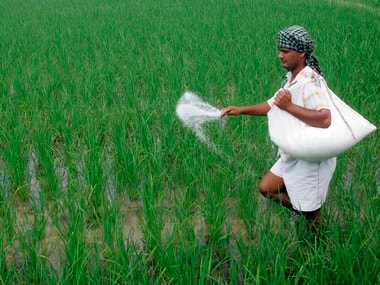
NEWS: 153 ‘lost’ varieties of rice being revived in Tamil Nadu

DC | S. V. Krishna Chaitanya | May 08, 2015, 05.05 am IST

Representational Image
Chennai: A little known farmer in Tamil Nadu’s Tiruvarur district is tirelessly engaged in conserving and reviving traditional rice varieties that should help reverse the ill-effects of eye-catching, fluffy white rice varieties many people consume oblivious of their harmful effects. If switched back to good old, organically grown rice varieties of rice, the risk of diseases like Type-2 diabetes can be averted, say experts.
A visit the farm of R. Jayaraman, an ordinary farmer from Adirangam village in Thiruthurai-poondi in Thiruvarur district, is worthwhile. With hardly any professional education, the 49-year-old Jayaraman has been able to trace and conserve 153 ‘lost’ traditional rice varieties of Indian origin, which are known to have distinct medicinal properties, ideal in combating lifestyle diseases like diabetes and resist natural calamities like drought and floods.
A school dropout, he has made it his life mission to revive the traditional rice varieties, which for thousands of years have adapted to climate changes. Speaking to the Deccan Chronicle, Mr. Jayaraman said these rice varieties “are purely organic and highly nutritious compared to today’s hybrid forms”.
Some of the top varieties cultivated in his 10-acre farm are Mappillai samba (controls sugar levels), Thouni (black rich in anti-oxidants), Poongar (ideal for pregnant women), Palkudavalai (good for heart patients), Elupaipu Samba (its gruel rejuvenates even bed-ridden). Mr. Jayaraman said there is another variety called ‘Chiraga samba’, used for making ‘biryani’ due to its natural fragrance. “The advantage of most of these traditional varieties is they have resistance to drought and floods.
They grow 6-7 feet tall and require less watering. Another rice variety, ‘Panag kattu kudavazai’ is suitable for salt and seawater intruded areas.
‘Kattaisamba’ is again another treasured variety, which can grow even in waterlogged areas. To spread awareness, Mr. Jayaraman organises national-level traditional paddy seed festival annually at his village, where he distributes 2 kg of paddy seeds to participating farmers. This novel initiative started in 2006 with just 16 varieties, will be held this year at his village farm on May 30-31.

SOURCE : http://www.deccanchronicle.com/150508/nation-current-affairs/article/153-%E2%80%98lost%E2%80%99-varieties-rice-being-revived-tamil-nadu